The 1996 Bandai Carddass cards came out a month before the Pokémon TCG, and here is the timeline
Three cards are called the first Pokémon card. The Bandai Carddass vending cards were on sale in Japan in late September 1996; the glossy CoroCoro Pikachu was given away on 15 October; the Base Set, in its no-rarity first print, followed on 20 October. This is the order they came in, what each one is, and what the market pays for each today.
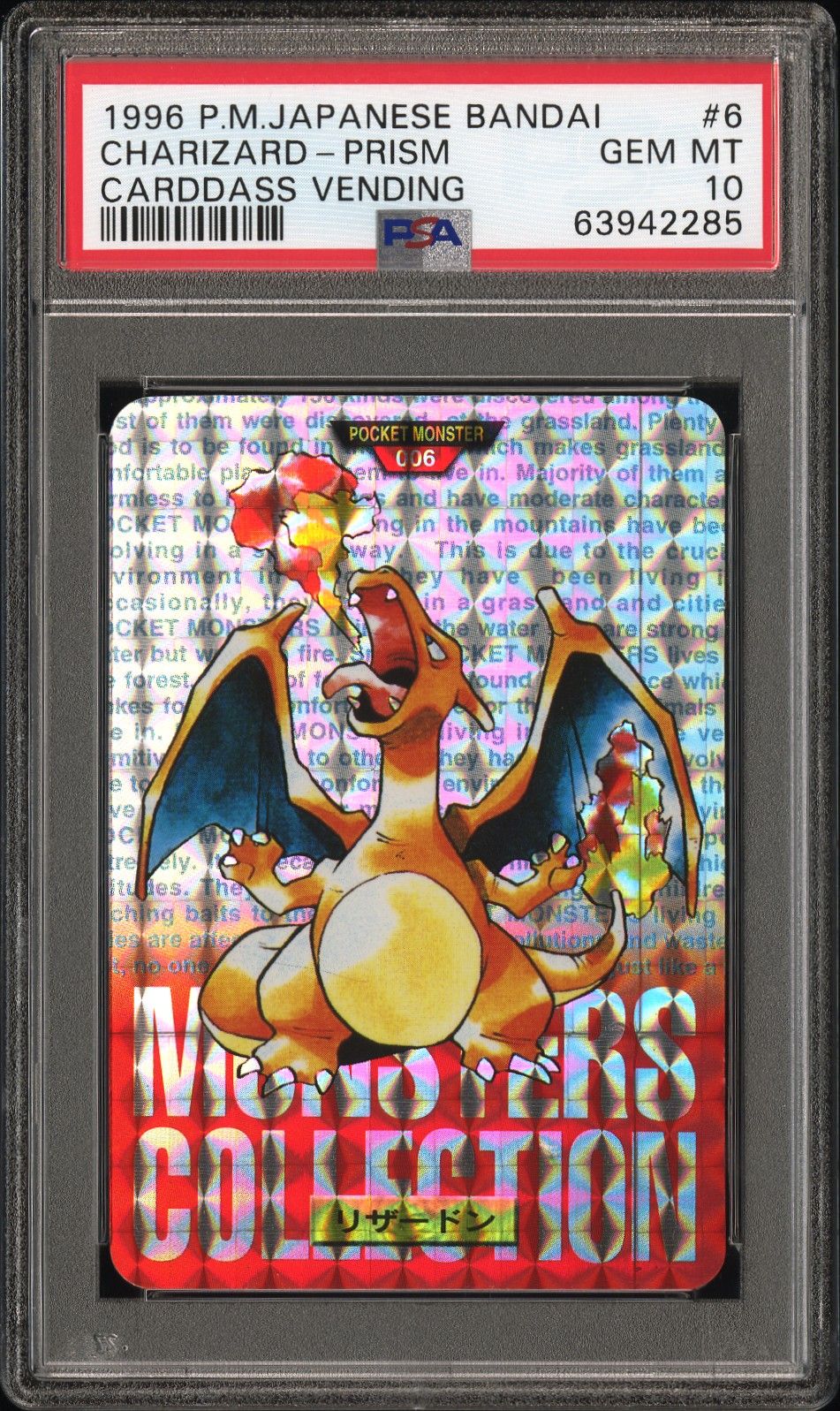
Pokémon Red and Green reached Japanese shops on 27 February 1996. The first cards followed within seven months, and they did not come from a booster pack. Bandai, which had run its Carddass card vending machines in Japanese toy shops and arcades since 1988, put Pocket Monsters cards into them in late September 1996, at 20 yen a card or 100 yen for five. The Pokémon Trading Card Game did not exist yet: Media Factory released the first Base Set on 20 October 1996. Between the two, on 15 October, the November issue of CoroCoro Comic carried a two-card peel-out insert, a glossy Pikachu and a glossy Jigglypuff, which were the first TCG cards anyone held.
| Date | What appeared | Where |
|---|---|---|
| 27 Feb 1996 | What appearedPokémon Red and Green, the Game Boy games | WhereNintendo |
| late Sep 1996 | What appearedBandai Carddass Pocket Monsters, Part 1, red and green versions | WhereCarddass vending machines |
| 15 Oct 1996 | What appearedGlossy Pikachu and Jigglypuff promos, peel-out insert | WhereCoroCoro Comic, November issue |
| 20 Oct 1996 | What appearedPokémon TCG Base Set, 102 cards, first print with no rarity symbols | WhereMedia Factory |
| Mar 1997 | What appearedTopsun gum cards (printed with a 1995 copyright line, which misled collectors for years) | WhereTop Seika |
What a Carddass card is
Carddass is Bandai's name for its card vending system, the same machines that sold Dragon Ball and Sailor Moon cards through the early nineties. The Pocket Monsters series was issued in two parts, Part 1 and Part 2, covering all 151 original Pokémon between them, with checklist and map cards alongside. They are not game cards: each shows the monster, its number, its type, and a block of text, and there is nothing to play. That is the whole reason the question of the first Pokémon card has three answers. The Carddass cards are the first Pokémon cards sold; the CoroCoro promos are the first Pokémon TCG cards; the Base Set is the first TCG set.
The guide most collectors of the set rely on is the one maxmaxcity published on Elite Fourum in July 2023, the 1996 Bandai Carddass prism price guide, which did the work of proving the set's date to the grading companies. Its argument is the one we build on: the set was "the very first Pokémon card set ever released to the general public", three to four weeks before the no-rarity Base Set and the CoroCoro promos.
Red and green
Every card in the set was printed twice, once with a red Monsters Collection banner across the foot and once with a green one, named for the two Game Boy versions. The red and green versions of a character came out together, so a red Pikachu and a green Pikachu are both Part 1, and a red Mewtwo and a green Mewtwo both Part 2. The artwork, the number and the text are identical; only the banner changes. PSA grades both under one entry, which is why its population report cannot say how many of each colour exist, and why this site counts them one cert at a time.
Twelve cards in the set are prisms, printed on a holographic foil: the three final starters, Alakazam, Machamp, Golem, Gengar, the three legendary birds, Mewtwo and Mew. PSA had graded 13,780 of them by 4 October 2026, 1,001 in PSA 10, of which the Charizard is 113. The 149 plain cards have been graded 18,534 times, so the whole heading stands at 32,314 graded cards.
Three first cards, side by side
| Card | On sale | What it is | PSA 10 population | Highest sale |
|---|---|---|---|---|
| Carddass Charizard prism | On salelate Sep 1996 | What it isvending card, red and green versions | PSA 10 population113 | Highest sale$100,100, green, 6 Oct 2026 |
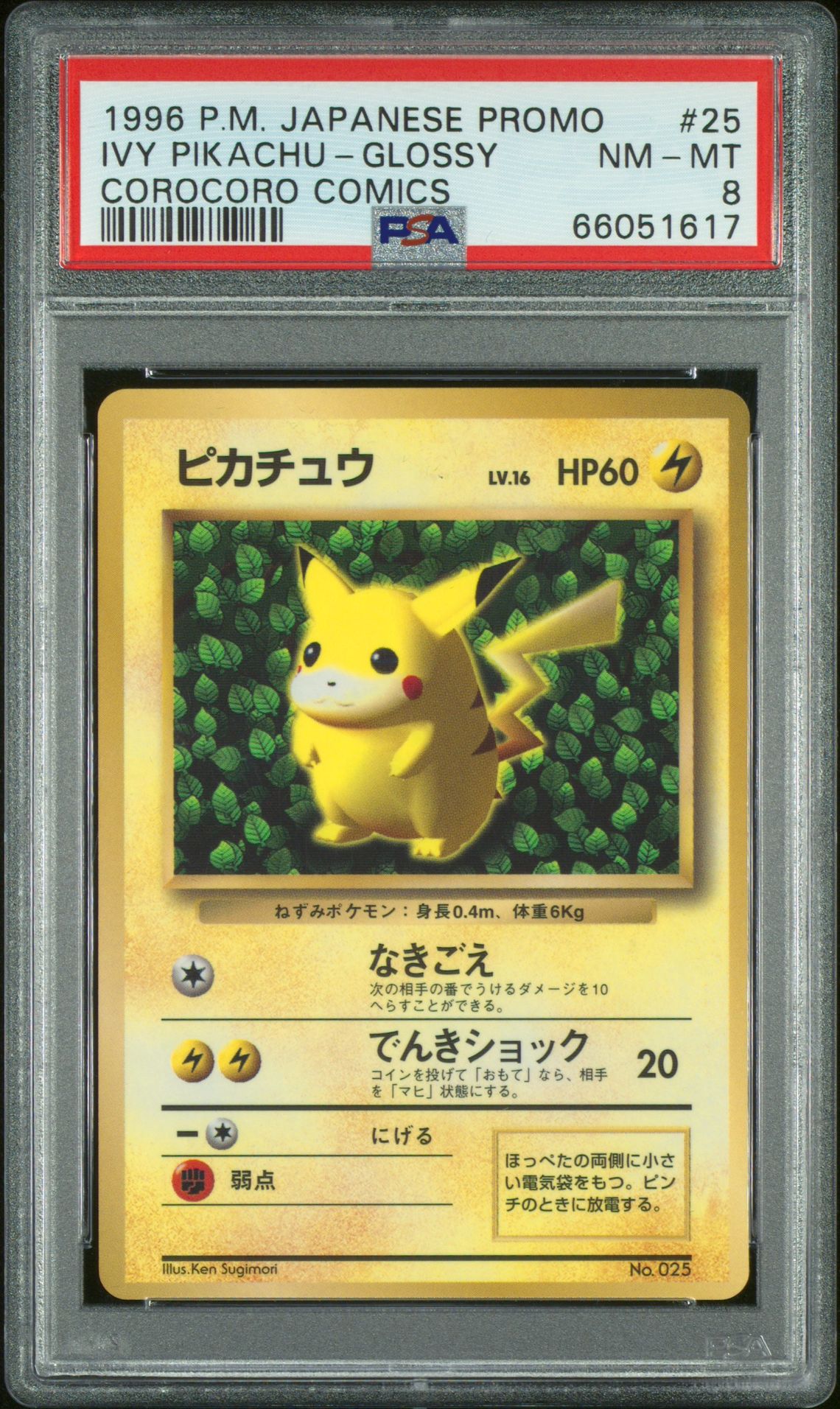
| CoroCoro glossy Pikachu | On sale15 Oct 1996 | What it ismagazine insert, peel-out, glossy | PSA 10 population0 | Highest sale$62,220 for a PSA 8, Goldin, 14 Sep 2026 |
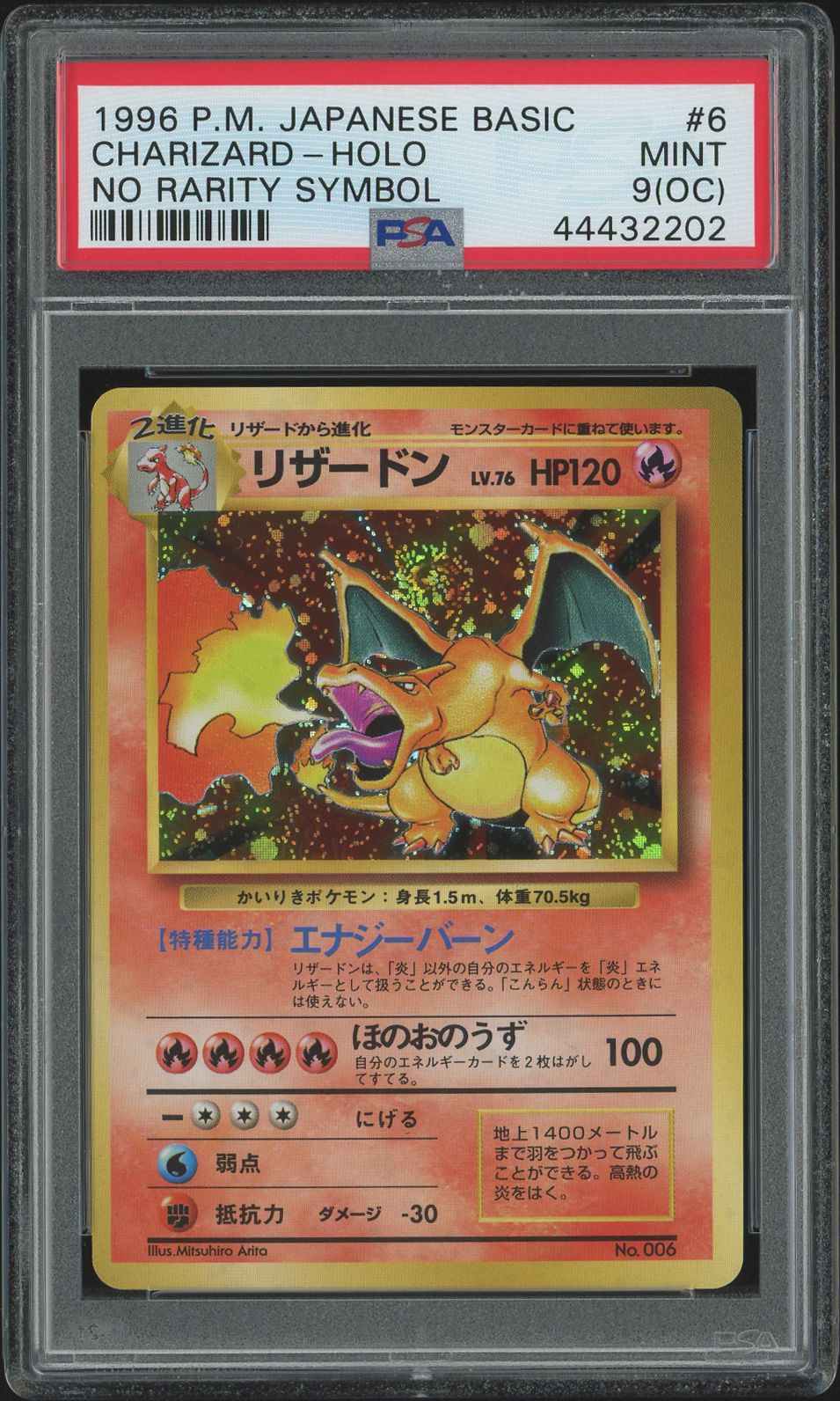
| No-rarity Base Set Charizard | On sale20 Oct 1996 | What it isfirst print of the first TCG set | PSA 10 population10 | Highest sale$1,700,000, private sale, 3 Mar 2026 |
The CoroCoro Pikachu is the hardest of the three to own in high grade, and the reason is physical. It was printed on glossy stock and had to be peeled off a sheet bound into the magazine, so most copies were creased or chipped before they reached a sleeve. On 7 October 2026 PSA's own pages list 23 glossy copies in PSA 9 and none graded higher; the PSA 8 population is 57. The two PSA 10s the report once showed were traced by collectors on Elite Fourum, in a thread maxmaxcity opened in February 2024, to mislabelled copies of the later non-glossy reprint, which can be told apart by the illustrator credit: the 1996 glossy card wrongly credits Ken Sugimori, the reprint credits Keiji Kinebuchi. A non-glossy Ivy Pikachu in PSA 10 sold for $156,000 at Fanatics Collect on 2 August 2026, and for $102,000, $92,000 and $78,000 in the two months after. For the glossy card the market is paying for an 8: $62,220 at Goldin on 14 September and $60,000 at Fanatics Collect on 28 September.
The Base Set is the other end of the scale. Its first print carried no rarity symbol in the bottom corner, and a few numbering errors (Venusaur was printed as #68) that the second print corrected, so the no-rarity cards are treated as the set's first edition. PSA has ten no-rarity Charizards in PSA 10 as of 7 October 2026, and one of them sold privately for $1,700,000 on 3 March 2026, the highest price paid for any Charizard. A PSA 9 of the same card sold at Fanatics Collect for $28,200 in October 2025 and $27,600 that December; a PSA 7 made $43,200 in June 2026.
Set against those two, the Carddass Charizard prism is the earliest and, in PSA 10, the most plentiful: 113 copies, both colours together, against ten and none. Its record is $100,100, set on 6 October 2026 by a green copy sold through PSA's own eBay store, and its 2026 median across eight sales is $40,048. A card that sells for a fifth of a no-rarity PSA 9's price in 2025 now sells for more than three times it, and the Carddass set's claim to being first is the part of the story collectors are paying for.
Why the Carddass date took so long to settle
For most of the hobby's history the Topsun gum cards were called the oldest Pokémon cards, because they carry a 1995 copyright line. The line is the date of Nintendo, Creatures and Game Freak's licence, not of the printing; the cards reached shops in March 1997, after the TCG. The Carddass cards carry no date at all, so their place in the order rested on magazine advertisements and the memory of people who bought them, until the set's collectors assembled that evidence and PSA, CGC and Beckett accepted it. The dating in this piece is theirs, and the earliest first-hand record is a CoroCoro advertisement placing the first machines' cards in the last ten days of September 1996.
The questions this gets asked
- What was the first Pokémon card?
- It depends what counts. The first Pokémon cards sold to the public were Bandai's Carddass vending cards, on sale in Japan in late September 1996. The first Pokémon Trading Card Game cards were the glossy Pikachu and Jigglypuff given away in CoroCoro Comic on 15 October 1996. The first TCG set was the Japanese Base Set of 20 October 1996.
- When did the 1996 Bandai Carddass Pokémon cards come out?
- Late September 1996, three to four weeks before the Base Set, with a CoroCoro advertisement of the time placing the first cards between 21 and 30 September. Part 2 followed shortly after. The cards carry no date themselves.
- Is there a PSA 10 glossy Ivy Pikachu?
- No. As of 7 October 2026 PSA lists 23 glossy CoroCoro Pikachus in PSA 9 and none higher. The PSA 10s the report once showed were traced to mislabelled non-glossy reprints. The non-glossy version does exist in PSA 10 and sold for $156,000 in August 2026.
- What is a no-rarity Base Set card?
- A card from the first print of the Japanese Base Set, 20 October 1996, which was printed without the rarity symbol in the bottom corner. PSA has graded ten no-rarity Charizards a 10; one sold privately for $1,700,000 on 3 March 2026.
- What is the difference between red and green Carddass cards?
- Only the colour of the Monsters Collection banner across the foot of the card, red for one version and green for the other, named for the two Game Boy games. Every card was printed in both. PSA does not record the colour on its label.
Every Carddass prism sale we hold is on the sales page, and each prism's attributed copies, red and green, are on its card page from the census. The 2026 run-up in the set's prices is covered in the quarter's report.
Check the figures yourself
Every sale in this report is on the sales page, and every attributed cert is on its card page with its photo.